

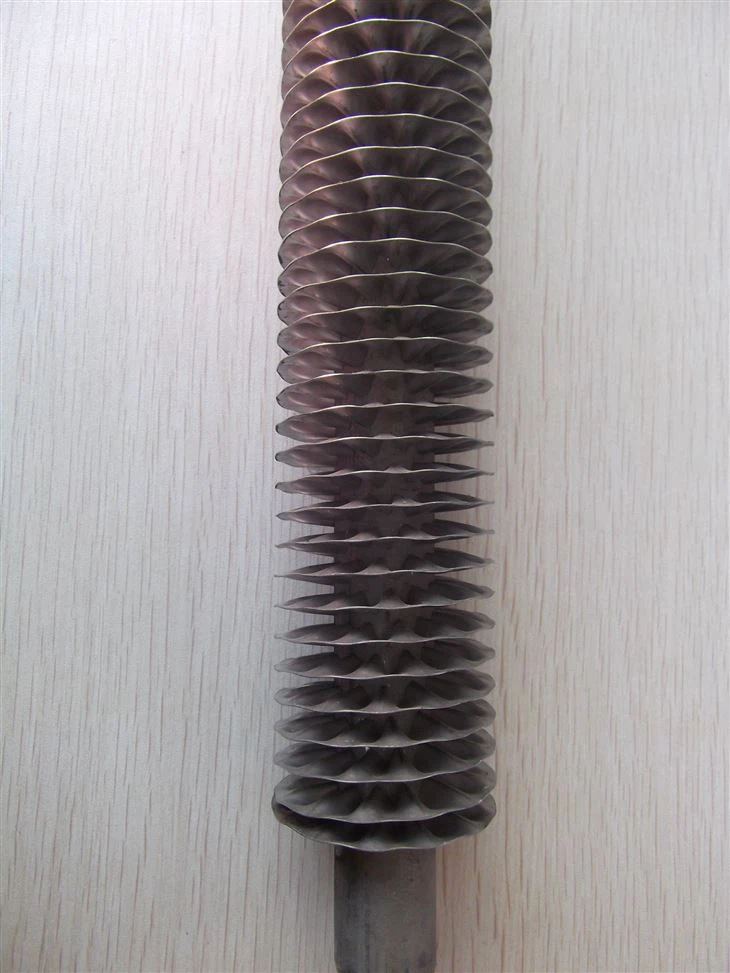
The set fin process is to process a batch of individual fins with a punch in advance, and then use manual or mechanical methods to set the fins on the outer surface of the pipe by interference at a certain pitch height (wing pitch). It is the earliest applied method for processing finned tubes. Due to the simple process of the set, the technical requirements are not high, the equipment used is cheap, and it is easy to maintain, so many factories are still using it. This process is a labor-intensive process plan, suitable for the capital and technical conditions of general small factories or township enterprises.
Sets made by manual methods are called manual sets. It uses tools to rely on human power to press the fins one by one. In this method, because the fin's pressing force is limited, the interference of the suit is small, and the fin is easy to loosen.
The mechanical set of fins is carried out on a fin set machine. Since the press-in of the fin is due to mechanical impact or liquid pressure, the press-in force is large, so a larger interference amount can be used. The bonding strength between the fin and the tube is high, and it is not easy to loosen. The productivity of the mechanically driven set machine is high, but the noise is high, the safety is poor, and the working conditions of the workers are not good. Although the above-mentioned problems do not exist in the hydraulic transmission, the equipment is more expensive, the technical requirements of the maintenance personnel are higher, and the productivity is also lower.
Mosaic spiral fins
The inlaid spiral finned tube is a spiral groove with a certain width and depth pre-processed on the steel pipe, and then the steel belt is embedded on the steel pipe on the lathe. During the winding process, due to a certain pre-tightening force, the steel belt will be tightly tightened in the spiral groove, thus ensuring a certain contact area between the steel belt and the steel pipe. In order to prevent the springback of the steel belt, both ends of the steel belt are welded to the steel pipe. In order to facilitate inlaying, there should be a certain side clearance between the steel strip and the spiral groove. If the backlash is too small and the interference is formed, the inlay process is difficult to proceed smoothly. In addition, the wound steel belt will always rebound to a certain extent, and as a result, the steel belt and the bottom surface of the spiral groove cannot be well joined. Inlaid fins can be carried out on general equipment, the cost is not high, but the process is complex and the production efficiency is low.
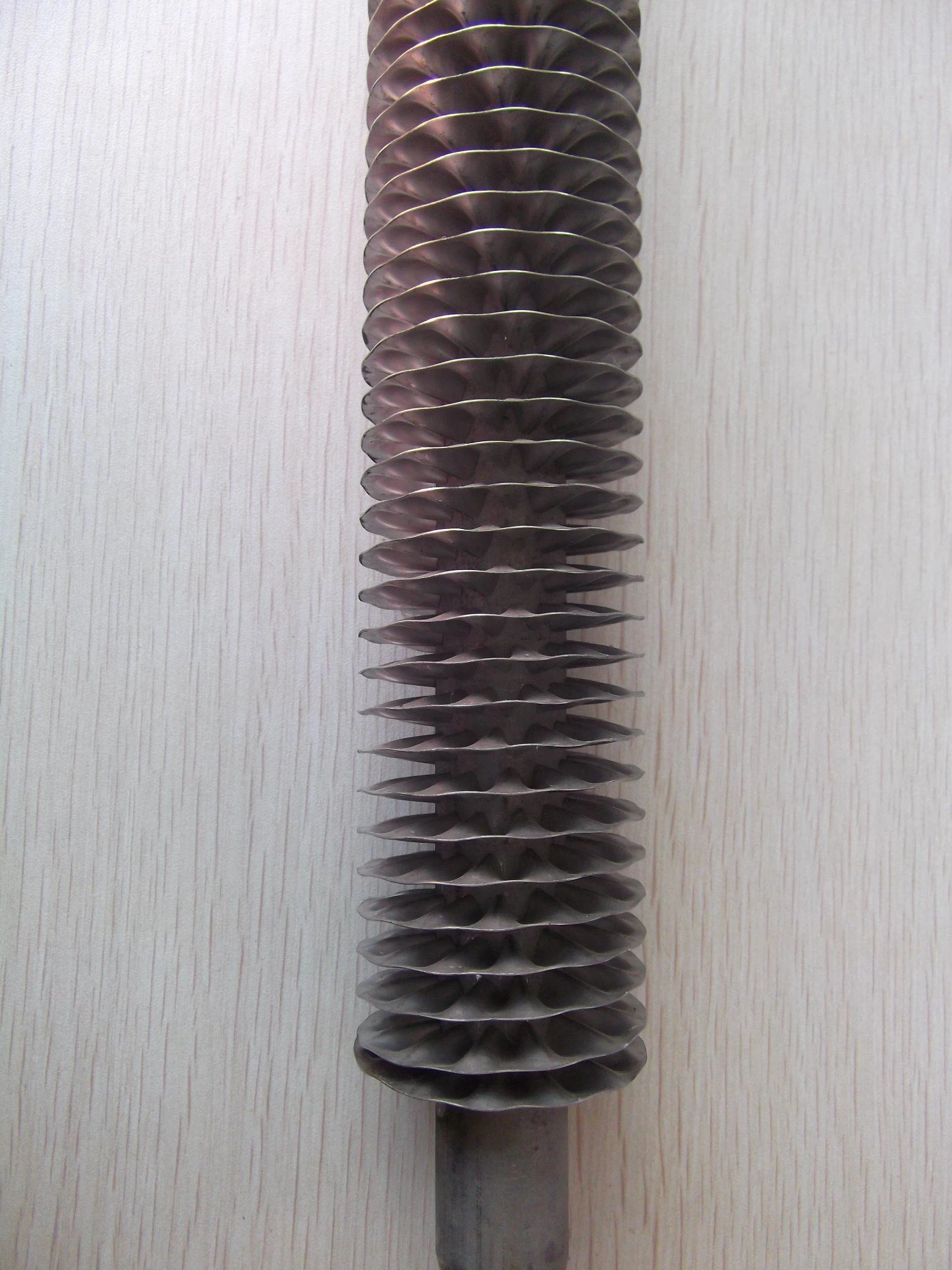
Brazed spiral finned tube
The brazing spiral finned tube is processed in two steps. First, the steel strip plane is perpendicular to the axis of the pipe and wound on the outer surface of the pipe in a spiral manner, and the two ends of the steel strip are welded to the steel pipe to fix it. Then, in order to eliminate the gap between the steel strip and the steel pipe, the brazing method is used Weld the steel strip and steel pipe together.
This method is expensive because of its cost, so another method is commonly used, that is, the tube with the steel strip wrapped in it is placed in a zinc bath for overall hot-dip galvanizing instead. Using integral hot-dip galvanizing Although the plating solution may not penetrate well into the very small gap between the fin and the steel pipe, a complete galvanized layer is formed on the outer surface of the fin and the outer surface of the steel pipe. The spiral finned tube with integral hot-dip galvanizing is limited by the thickness of the galvanized layer (when the galvanized layer is thick, the zinc layer is poorly solid and easy to fall off), and the zinc solution cannot be fully penetrated into the gap. The combination rate of steel pipes is still not high. In addition, the heat transfer coefficient of zinc is smaller than that of steel (about 78% of steel), so the heat transfer capacity is low. Zinc is extremely susceptible to corrosion in acids, alkalis, and sulfides. Therefore, the use of galvanized spiral finned tubes is not suitable for making air preheaters (recovery of boiler flue gas waste heat).
High frequency welding spiral fin
High-frequency high-frequency welding spiral finned tube is one of the most widely used spiral finned tubes. It is now widely used in the waste heat recovery of power, metallurgy, cement industry, petrochemical industry and other industries. The high-frequency welding spiral finned tube is to use the skin effect and proximity effect of the high-frequency current to heat the outer surface of the steel strip and the steel pipe while the steel strip is wound around the steel pipe, until the plastic state or melting, a certain pressure on the wound steel strip Complete welding next. This high-frequency welding is actually a solid-phase welding. Compared with inlaying, brazing (or integral hot dip galvanizing) and other methods, it is more advanced in terms of product quality (high welding rate of fins, up to 95%), productivity, and degree of automation .
Three-roller cross-rolled integral spiral finned tube
The production principle of the three-roller cross-rolled integral spiral finned tube is as follows: the smooth tube is lined with a mandrel, driven by the rotation of the roller blade, and the seamless steel pipe is processed on the outer surface of the cavity formed by the rolling groove and the core head Out fins. The finned tube produced by this method is an organic whole as the base tube and the outer fin, so there is no problem of contact thermal resistance loss, and it has a higher heat transfer efficiency. Compared with the welding method, the three-roll oblique rolling method has the advantages of high production efficiency, low raw material consumption, and high heat exchange rate of the finned tube.
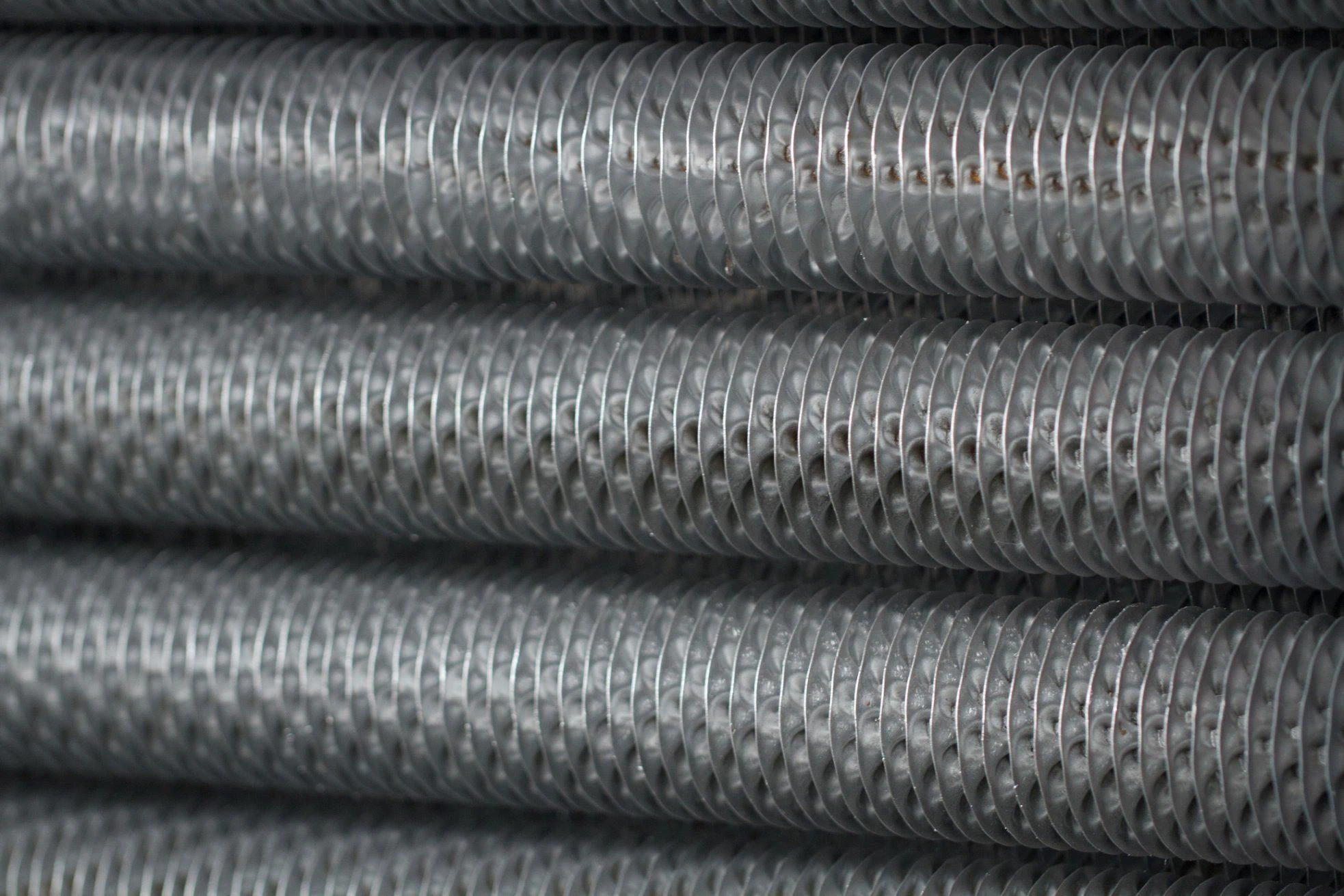
The three-roller cross-rolled integral spiral finned tube technology has been successfully applied to single-finned tubes or composite finned tubes with copper and aluminum fins, or steel low-finned tubes; the steel integral finned tube market It is often seen as a low-fin tube, and the integral high-fin tube is mostly made of aluminum, copper, etc. It is generally cold rolled.
Hot Tags: spiral copper aluminum extruded finned fin tube for heat exchanger, China spiral copper aluminum extruded finned fin tube for heat exchanger manufacturers, suppliers, factory, Oval Alunimum Finned Tube, High Frequency Welding Finned Tube, Coil condenser, heat exchanger coils, Cooper tube condenser cooling coil, Cooper radiator