

01
What is coagulation?
The process of combining coagulation and flocculation is the coagulation process. Coagulation is often used in experiments or engineering, such as adding ferrous sulfate and other agents in the water to eliminate the electrostatic repulsion between colloidal particles, and then adding polyacrylamide (PAM) to make the particles gradually larger and form Alum flowers visible to the naked eye will eventually settle.
02
What is adsorption?
Use porous solids (such as activated carbon) or flocs (such as polyiron) to adsorb toxic and harmful substances in wastewater on the surface or micropores of solids or flocs to achieve the purpose of purifying water. This treatment method is called Adsorption treatment. The object of adsorption can be insoluble solid matter or soluble matter. Adsorption treatment has high efficiency and good effluent quality, so it is often used as advanced wastewater treatment. Adsorption treatment can also be introduced into the biochemical treatment unit to improve the efficiency of biochemical treatment (for example, the PACT method is one of them).
03
What is the biochemical treatment of wastewater?
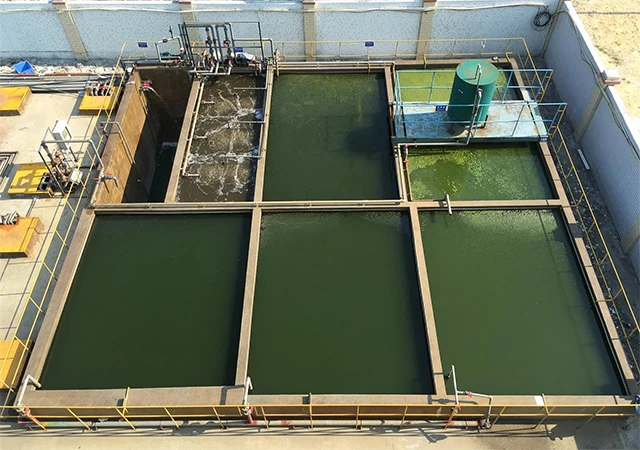
The biochemical treatment of wastewater is one of the most important processes in the wastewater treatment system, referred to as biochemical treatment. Biochemical treatment is the use of microbial life activities to effectively remove soluble organic matter and part of insoluble organic matter in wastewater to purify the water.
04
How do microorganisms decompose and remove organic pollutants in wastewater?
Since there are organic substances such as carbohydrates, fats, and proteins in wastewater, these inanimate organic substances are food for microorganisms. One part is degraded and synthesized into cellular material (combined metabolites), and the other part is degraded and oxidized into water, carbon dioxide, etc. (catabolites) ), the organic pollutants in wastewater are degraded and removed by microorganisms in this process.
05
What are the factors related to microorganisms?
In addition to nutrients, microorganisms also need appropriate environmental factors, such as temperature, pH, dissolved oxygen, and osmotic pressure to survive. If the environmental conditions are abnormal, it will affect the life activities of microorganisms, and even mutate or die.
06
What temperature range is the most suitable for microorganisms to grow and reproduce?
In wastewater biological treatment, the most suitable temperature range for microorganisms is generally 16-30°C, and the highest temperature is 37-43°C. When the temperature is lower than 10°C, the microorganisms will no longer grow. In a suitable temperature range, every time the temperature increases by 10℃, the metabolic rate of microorganisms will increase correspondingly, and the removal rate of COD will also increase by about 10%; on the contrary, every time the temperature decreases by 10℃, the removal rate of COD will decrease by 10%, so In winter, the biochemical removal rate of COD will be significantly lower than other seasons.
07
What is the optimum pH range for microorganisms?
The life activity and material metabolism of microorganisms are closely related to pH. The pH range of most microorganisms is 4.5-9, and the most suitable pH range is 6.5-7.5. When the pH is lower than 6.5, the fungus starts to compete with the bacteria. When the pH reaches 4.5, the fungus will have a complete advantage in the biochemical tank, which will seriously affect the sedimentation results of the sludge; when the pH exceeds 9, the metabolic rate of the microorganisms will be reduced. Obstructed. Different microorganisms have different requirements for the adaptation range of pH.
In aerobic biological treatment, the pH can be changed between 6.5-8.5; in anaerobic biological treatment, the requirement of pH for microorganisms is stricter, and the pH should be between 6.7-7.4.
08
What is dissolved oxygen? What is the relationship between dissolved oxygen and microorganisms?
The oxygen dissolved in water is called dissolved oxygen. The living organisms and aerobic microorganisms in water bodies rely on dissolved oxygen as the oxygen they depend on. Different microorganisms have different requirements for dissolved oxygen. Aerobic microorganisms need to supply sufficient dissolved oxygen. Generally speaking, dissolved oxygen should be maintained at 3mg/L, and the minimum should not be less than 2mg/L; facultative microorganisms require dissolved oxygen in the range of 0.2-2.0mg/L Anaerobic microorganisms require the range of dissolved oxygen to be below 0.2mg/L.