

Feed drying is an essential process for improving animal feed quality and ensuring its long-term storage stability. However, the drying process consumes a significant amount of energy and generates waste heat, leading to lower efficiency and environmental impacts. Therefore, it is important to optimize feed drying and heat recovery to reduce energy consumption and enhance sustainability.
One effective solution is to integrate heat exchangers in the feed drying system to recover waste heat and transfer it to other processes or facilities. Heat exchangers are devices that transfer heat from one fluid to another without mixing them, hence reducing energy consumption and costs. In this case, the waste heat from feed drying can be transferred to other preheating or even cooling processes, such as animal housing or water heating. By doing so, the overall efficiency and sustainability of animal production can be improved.
Several types of heat exchangers can be used, depending on the specific application and conditions. Plate heat exchangers, tube heat exchangers, and spiral heat exchangers are commonly used in various industries, including the animal feed industry. They differ in their design, operation, and maintenance requirements, as well as their efficiency and cost-effectiveness.
However, heat exchangers require proper maintenance and operation to avoid potential issues, such as fouling, corrosion, or leakage. Therefore, it is important to follow the manufacturer's instructions and guidelines, as well as conduct regular inspections and maintenance activities. Moreover, the choice of materials and fluids used in heat exchangers should be compatible with each other and the feed drying process, to prevent chemical reactions or contamination.

Finned tube heat exchanger

Shell and tube heat exchanger

Plate heat exchanger
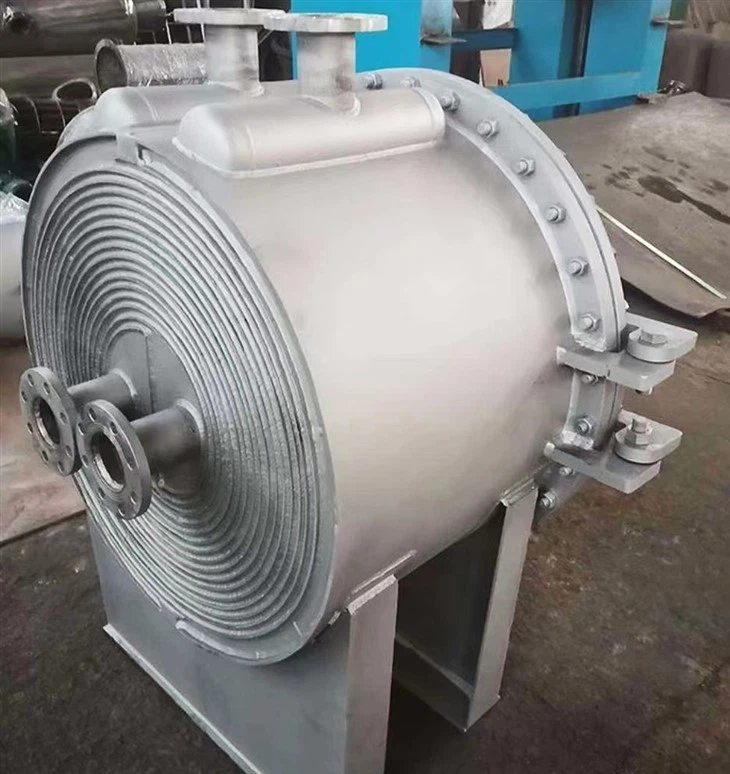
Spiral heat exchanger
In summary, feed drying and heat recovery with heat exchangers can significantly improve the efficiency and sustainability of animal feed production. By saving energy and reducing waste heat, not only can costs be reduced, but also potential environmental impacts can be mitigated. Proper maintenance and operation of heat exchangers are crucial for ensuring their reliable and long-lasting performance.