

what is the fin-type heat exchanger
Flat-type heat exchanger adopts advanced mechanical expansion tube and arc corrugated double-flange aluminum sheet structure fin. Mechanical expansion tube makes the copper tube and aluminum fin in close contact, and arc corrugation can promote turbulence, destroy air boundary layer and improve heat transfer coefficient. Advanced structural form, coupled with reasonable design of tube number and sheet spacing, makes the heat exchanger have good heat transfer, small air resistance, precise structure and light weight. This article will introduce the application principle, process and effect of fin-type heat exchanger in coating machine in detail, and show its superior performance and economic benefits through data charts.
Application principle:
First of all, we must understand the process of coating machine. Coating machine is mainly used for surface coating process production of film, paper, etc. This machine is to coat the rolled substrate with a layer of glue, coating or ink with specific functions, and then rewind it after drying. Our fin-type heat exchanger plays a role in drying!
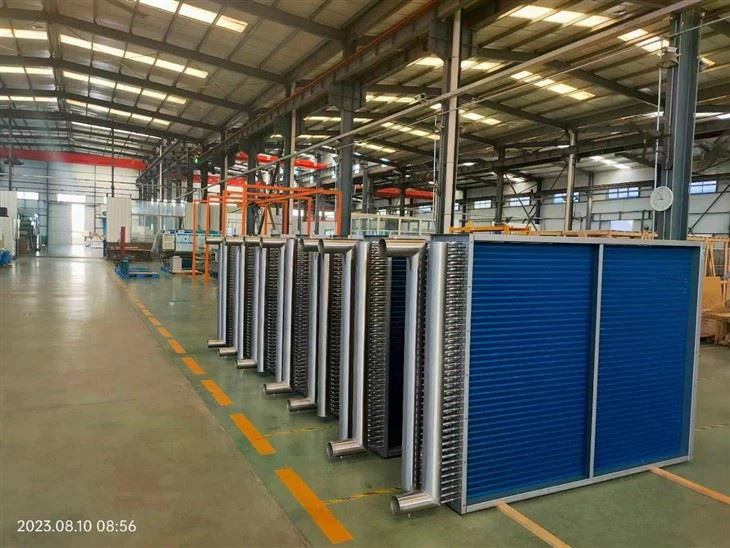
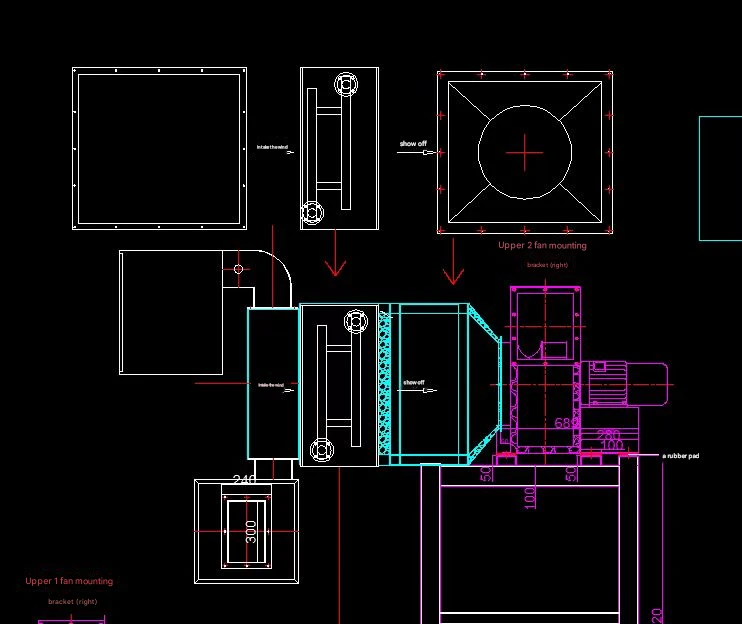
Process:
During the drying process, the plate-type heat exchanger is mainly divided into multiple stages (1. Fresh air steam and old air 2. Residual temperature of recycled air and fresh air steam) for heating and heat exchange. The first application process: the old air is passed into the plate-type heat exchanger, heated by high-temperature fresh air steam, and can be dried normally after reaching the predetermined temperature. The second application process: the recycled air is heated by fresh air steam. The residual temperature of the recycled air is high, and it can be dried after reaching the predetermined temperature in a short time.
Effect:
The drying process in the previous coating machine was completely assisted by electricity to make the air reach the process required temperature. After upgrading and transforming into a plate-type heat exchanger to assist heating, the first and most obvious effect is definitely a decrease in electricity use, reducing electricity use expenses. The second obvious effect is to reduce the use of fresh air steam, because the residual temperature of the recycled air in the second application process is still very high. It only needs to enter our plate-type heat exchanger again, pass fresh air steam, and only requires less fresh air steam and electricity than before, and it can quickly reach the predetermined temperature.
