

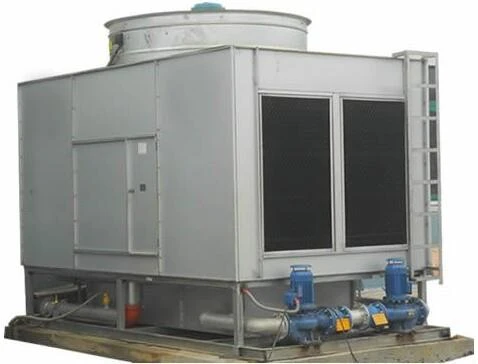
The thermal calculation of cooling towers has two purposes. The first is the known water load and heat load. Under specific weather conditions, the area required by the cooling tower is determined according to the cooling requirements. The second is the conditions of the known cooling tower. Calculate the water temperature after cooling under the specific water load and heat load and weather conditions. When selecting a cooling tower supplied in the engineering design, it is to check whether the water temperature after cooling can meet the requirements according to the height, volume, air volume and known conditions of the cooling tower's packing.
There are many ways to calculate a cooling tower. In practice, some methods are more accurate,
High, but the calculation is more complicated and generally not used. Mechanical ventilation cooling tower calculation using Peng Jun enthalpy difference method or graphical method is more common. When a mechanical ventilation cooling tower is directly selected in a refrigeration device, it can be calculated according to the calculation chart in the product sample.
The function of the cold storage room is to establish a low temperature environment where the perishable products can be stored in order to maintain the original quality of the food to the maximum extent. Therefore, all the heat that affects the temperature of the warehouse inside and outside the warehouse should be removed to ensure the stability of the warehouse temperature. In order to guarantee this condition, corresponding refrigeration equipment is needed, and the refrigeration capacity produced by it should be equal to the size of the interior and exterior of the warehouse that causes fluctuations in the temperature of the warehouse. Based on this, re-selecting refrigeration compressors and auxiliary equipment.
The cold load of the cold storage room is not constant throughout the year, and its size is affected by various factors such as outdoor air temperature, food cooling processing technology requirements, the number of cold processed products, and operation and management methods. Therefore, in general, first calculate the maximum cooling load of each cold room, and then determine the cooling equipment load in the warehouse, and then multiply the cold load of some cold rooms by different factors according to different situations to correct it.