

smooth tube VS Finned tube heat exchanger
When it comes to heat exchangers, there are two common types: finned tube heat exchangers and heat exchangers with straight tubes. The former is also known as a "surface exchanger," while the latter is referred to as a "shell and tube exchanger."

Finned Tube Heat Exchangers
Finned tube heat exchangers are a type of surface exchanger where one fluid flows over the exterior of circular tubes while another fluid flows through the tubes. These tubes have numerous fins attached to them, which work to increase the surface area.
Finned tubes are ideal for use in environments where there is limited space available for heat exchangers. They are also commonly used in forced-convection applications because the fins lend themselves to better heat transfer. These heat exchangers are particularly effective at dissipating heat, which makes them well-suited for use in air-cooled heat exchangers.
smooth Tube Heat Exchangers
Smooth tube heat exchangers, also known as "bare tube" heat exchangers, are another type of shell and tube heat exchanger. They are called smooth tubes because they are optimized to transfer heat without increasing pressure drop. They are made from lighter materials such as aluminum and are thinner than other light tubes.
Smooth tube heat exchangers are used for different purposes than finned tube exchangers. They are suitable for applications where the primary concern is avoiding contamination. For instance, they are used in pharmaceutical applications, food processing plants, and water purification facilities. Light tubes are also ideal for heat exchangers that must operate at high temperatures or need to perform extreme heat transfer duties.
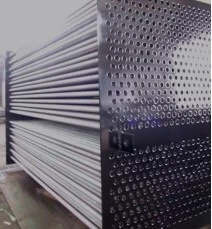
In conclusion, both finned tube and light tube heat exchangers have their distinct benefits and drawbacks. Finned tube heat exchangers are ideal for environments where space is at a premium or where forced-convection is required. Light tubes, on the other hand, are perfect for applications where cleanliness is critical and where high-temperature heat transfer is necessary. Understanding the differences between these two types of heat exchangers can help businesses choose the appropriate heat exchanger for their unique needs.