

Working Principles:
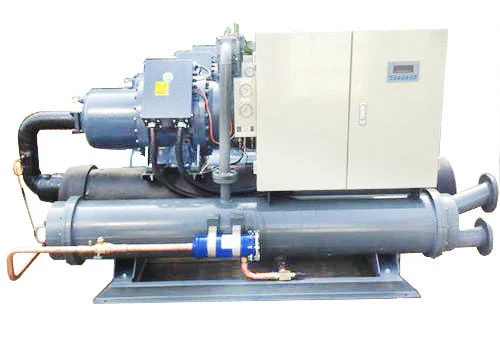
- Chiller: A chiller lowers the temperature by circulating water. It uses a compressor to compress the refrigerant into high-temperature and high-pressure gas. The refrigerant is then cooled into high-pressure liquid through the condenser. After passing through the expansion valve, the refrigerant pressure decreases, and it enters the evaporator to absorb heat and cool the circulating water.
- Freezer: A freezer lowers the temperature using a refrigerant. It uses a compressor to compress the refrigerant into high-temperature and high-pressure gas. The refrigerant is then cooled into high-pressure liquid through the condenser. After passing through the expansion valve, the refrigerant pressure decreases, and it enters the evaporator to absorb heat and lower the temperature.
Temperature Range:
- Chiller: A chiller can typically cool water to around 5℃, suitable for general cooling needs.
- Freezer: A freezer can cool water or other liquids to temperatures below 0℃, suitable for applications that require lower temperatures.
Applications:
- Chiller: Chillers are mainly used in air conditioning and industrial production. For example, they are used to cool machinery and equipment, and for cooling during the production process.
- Freezer: Freezers are mainly used in the food and pharmaceutical industries. For example, they are used for freezing food and refrigerating pharmaceuticals.
Equipment Structure:
- Chiller: A chiller typically consists of a compressor, condenser, expansion valve, and evaporator.
- Freezer: A freezer typically consists of a compressor, condenser, expansion valve, evaporator, and refrigerant.