

The treatment methods for high-chroma food industry wastewater at home and abroad mainly include: physical methods, chemical methods and biological methods. Currently, the commonly used methods include adsorption, coagulation, oxidation, reduction, electrolysis, biochemistry, etc.
Physical method
Adsorption method
The adsorption method is a method in which porous solid materials are used as adsorbents to adsorb high-chromaticity substances in wastewater on their surfaces. Commonly used adsorbents are activated carbon, diatomaceous earth, coke powder, and macroporous adsorption resin.
Activated carbon has the characteristics of loose and porous, low bulk density, specific surface area, etc. It can efficiently adsorb water-soluble pigments and dyes, but cannot adsorb suspended solids and insoluble dyes.
Activated carbon is expensive to regenerate, and it is generally used in the treatment of a small amount of low-concentration wastewater. Boiler cinder, steel slag, coke powder and agricultural product waste (such as bagasse, peanut shell, etc.) have a certain adsorption capacity and can replace activated carbon.
Agglutination
The agglutination method uses metal hydroxide or organometallic polymer adsorption or ion bridging for decolorization. This method is most effective for particles with a particle size in the range of 10-9 nm to 10-8 nm.
The principle of this method is to add a flocculant with a charge or a polar functional group to eliminate the effect of electrostatic repulsion between the particles of the original system, and promote their aggregation and sedimentation, so as to achieve the purpose of separation and decolorization.
Commonly used flocculants include inorganic flocculants and polymer flocculants.
Inorganic flocculants include aluminum series [mostly a mixed solution of Al2O4 or (NH4)2SO4], iron series [FeSO4, Fe2 (SO4)3 or FeCI3, etc.], as well as acid-base coagulation used to change pH and make certain substances settle Agent. Inorganic flocculants have a good effect on the treatment of colored wastewater, but are too sensitive to pH, and will have a satisfactory effect only under the most suitable pH conditions.
The polymer flocculant has a large molecular weight, strong ability to bind to particles, less dosage, fast agglutination, and is more adaptable to pH than inorganic flocculants.
chemical method
Redox method
The oxidation-reduction method mainly uses redox agents such as ozone, peroxide, dithionite, hypochlorite, etc. to treat high-color wastewater to break the double bonds in the organic molecules to achieve the purpose of decolorization.
There are many reports on the use of oxidation-reduction method to treat food high-color wastewater, and new progress has been made in many aspects.
Electrochemical method
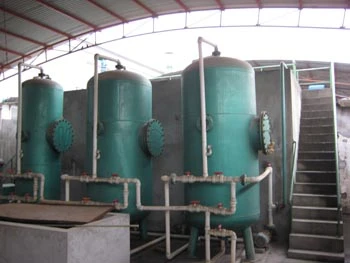
Electrochemical treatment of wastewater generally does not need to add chemicals, simple post-treatment, small footprint, convenient management, and is called a clean treatment method. With the development of the power industry, electrochemical method is gradually becoming a widely used water treatment technology.
The electrochemical decolorization method can be divided into two-dimensional electrode method and multi-dimensional electrode method.
The two-dimensional electrode method uses two soluble or insoluble plates as electrodes, and direct current is applied to achieve the purpose of decolorization through the electrochemical redox reaction that occurs in the electrolytic cell.
The multi-dimensional electrode method is to fill granular or other debris-like working electrode materials between the traditional two-dimensional electrodes, and the main electrode supplies current. The surface of the filled working electrode material is charged and becomes a new electrode, thereby achieving decolorization through electrochemical reaction purpose.
Biological method
Activated sludge method
The activated sludge method uses activated sludge containing a large number of microorganisms to absorb and oxidize and decompose the organic or inorganic pollutants in the sewage, thereby purifying the sewage. Due to the large capacity and high efficiency of water treatment, this method has been widely used in the treatment of various wastewater.
Anaerobic biological treatment
The anaerobic biological treatment method is an organic sewage treatment method that uses facultative anaerobes and obligate anaerobes to degrade macromolecular organic matter in sewage into low-molecular compounds, and then convert it into methane and carbon dioxide.
The A/PAC-MAS process (anaerobic/activated carbon-modified activated sludge method) is used to treat soy sauce production wastewater. Through the combination of dominant bacterial species decolorization and PAC decolorization, soy sauce production wastewater with a chromaticity of more than 200 times can be effectively treated. The chromaticity of the effluent can be stabilized below 40 times.