

An industrial refrigeration system is a system used to control and maintain parameters such as temperature, humidity, and pressure in the industrial production process. It usually consists of a compressor, condenser, evaporator, expansion valve, etc. It absorbs and releases heat by circulating the refrigerant, thus realizing the temperature control in the industrial production process.
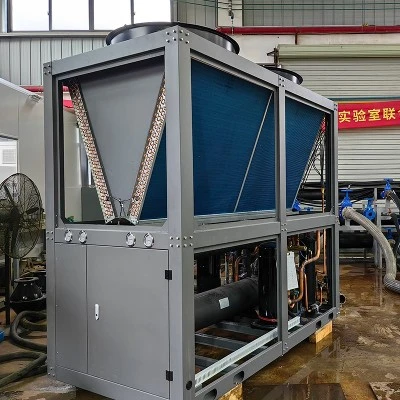
The working principle of industrial refrigeration system is to utilize the refrigerant to change from low temperature and low pressure state to high temperature and high pressure state under the action of compressor, and then release the refrigerant through the condenser to make it into high temperature and high pressure gas. Next, the refrigerant enters the evaporator through the expansion valve, thus lowering the temperature and pressure and turning it into a low-temperature, low-pressure gas. Finally, the refrigerant enters the compressor again, and the cycle repeats itself, thus realizing the temperature control in the industrial production process.
Industrial refrigeration systems are widely used in food, medicine, chemical, electronics, aerospace and other fields.
For example, in the process of food processing, the need for food freezing, refrigeration, preservation of freshness and other treatments to ensure the quality and safety of food; in the process of pharmaceutical production, the need for low-temperature preservation and transportation of medicines to ensure the effectiveness and stability of medicines; in the process of electronic manufacturing, the need for temperature control of electronic components to ensure the quality of the product and performance. Therefore, industrial refrigeration systems play an important role in ensuring product quality, improving production efficiency and reducing energy consumption.