

China is rich in geothermal resources, ranking among the best in the world. Among them, the heat energy of convection geothermal fields is 3500MW, and the heat energy of conduction geothermal fields is 2108421MW. At present, there are more than 2780 geothermal hot spots found in 30 provinces, cities and autonomous regions across the country.
Due to the different geothermal temperatures and water quality, a variety of geothermal energy utilization projects have been formed, such as heating, aquaculture, agricultural greenhouses, industrial drying, anti-bleaching and dyeing, medical care, food, slaughter and other industries. Geothermal energy is more economical for urban area central heating than other fuels; especially in the case of rising energy prices, geothermal heating is more economical. For example, among the 230,000 urban population in Iceland, 75% use geothermal heating, and the cost is only 24.3% of burning light oil or 51% of burning heavy oil.
Advantages of geothermal central heating
Energy saving
Save a lot of conventional energy - coal, oil, natural gas or electricity. According to the climate conditions in the north (China), geothermal heating is equivalent to saving 2.6 tons of raw coal per household every winter.
Protect the environment
Reduce environmental pollution and eliminate the sources of pollution from small coal stoves.
Improve traffic conditions
Improve the transportation tension caused by coal and slag, and also reduce the site for coal storage.
Improve living standards
Improve residents' sanitary conditions and reduce heating costs. For example, the average cost of heating with 65℃ geothermal water is 29.6 yuan/(m²·year), while the cost of heating with a boiler is 38.1 yuan/(m²·year). Moreover, the heating period can be advanced or delayed, which is convenient and flexible.
Selection of geothermal central heating heat exchanger
Since the water volume of a single well of geothermal resources is not large (about 100t/h), the water temperature is not high (below 100℃), but the mineralization is high, the content of corrosive media is high, and it is easy to corrode and scale. The selected heat exchanger is required to have the following properties:
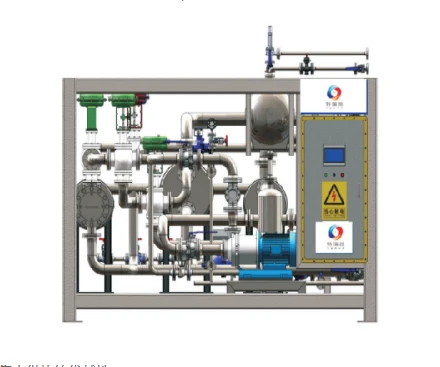
Based on the above requirements, after comparing various types of heat exchangers, it is believed that plate heat exchanger is the most ideal.
Corrosion resistance. Good anti-scaling performance.
High heat transfer efficiency under small temperature difference.
Compact structure, small footprint, easy to clean, maintain and repair.
Easy to operate, durable equipment, long life.