


Soaking process
Process requirements: Corn needs to be soaked in a sulfurous acid solution at 50~55℃ for 48~72 hours to soften the endosperm and separate the components.
Equipment application: Plate heat exchanger or shell and tube heat exchanger.
Function: Maintain a constant temperature soaking environment and indirectly heat the solution through steam or hot water.
Starch washing and separation
Process requirements: Low temperature (≤35℃) is required to prevent protein denaturation when separating starch and protein.
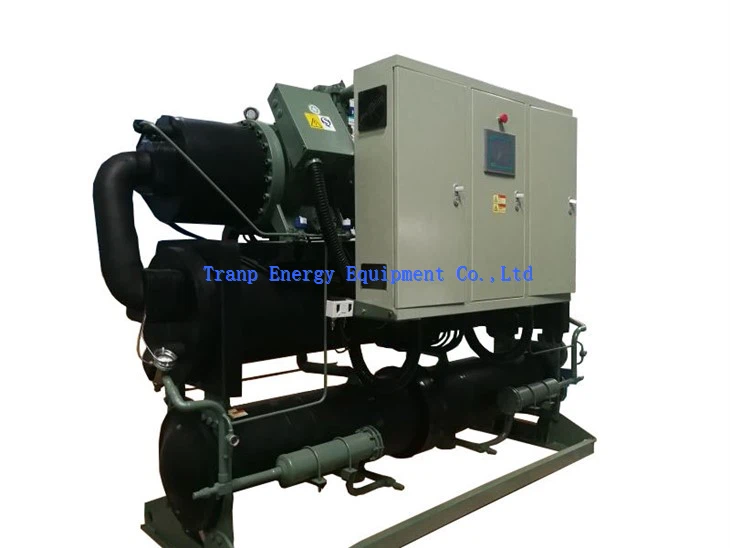
Equipment application: Chiller (provides chilled water) + heat exchanger.
Function: Cool process water and starch slurry.
Principle: The chilled water of the chiller exchanges heat with the process fluid through the heat exchanger to maintain a low temperature environment.
Fermentation process (such as alcohol and lactic acid production)
Process requirements: The fermentation tank needs to be kept at 30~35℃ (yeast fermentation) or a specific temperature (such as lactic acid bacteria requires a higher temperature).
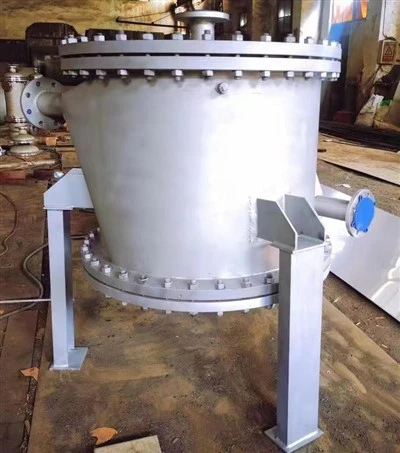
Equipment application: spiral plate heat exchanger.
Function: Remove fermentation heat to avoid high temperature inhibiting bacterial activity.
Evaporation concentration (such as syrup, corn syrup)
Process requirements: Condensation of secondary steam in multi-effect evaporator.
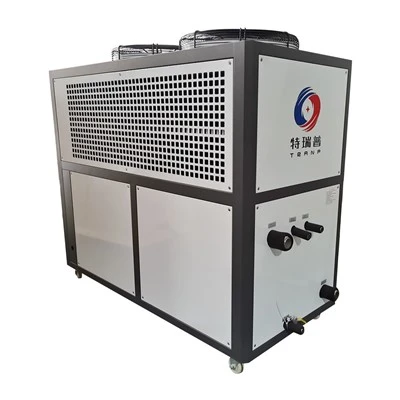
Equipment application: Condenser (heat exchanger) + chiller.
Function: Rapidly condense steam and maintain vacuum.

Drying and cooling
Process requirements: Starch or protein powder needs to be cooled from high temperature (60~80℃) to room temperature after drying.
Equipment application: fluidized bed heat exchanger or air cooler.
Function: Prevent agglomeration and reduce packaging temperature.
Principle: Indirect heat exchange and cooling by cold air or cooling water.

Saccharification and liquefaction (production of starch sugar)
Process requirements: The liquefaction stage needs to be quickly heated to 105~110℃, and the saccharification stage needs to be cooled to 60℃.
Equipment application: Instantaneous heat exchanger (such as plate type) + chiller.
Function: Rapid temperature adjustment to meet enzyme reaction conditions.
Principle: Steam is used for heating in the high temperature section, and chiller is used for cooling in the cooling section.