

In recent years, China's VOCs governance industry is in a stage of rapid development, the market scale has expanded significantly. 2020 will reach 140 billion yuan to 150 billion yuan, and the next five years, this market is expected to exceed 300 billion yuan. In the next five years, the market size is expected to exceed 300 billion yuan.
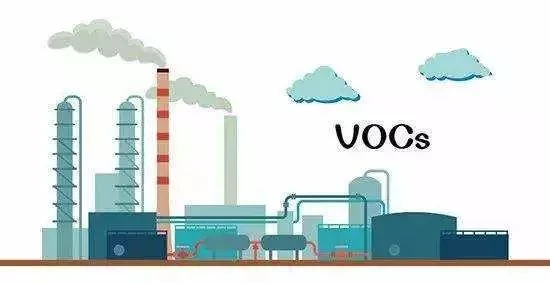
Following the "13th Five-Year Plan" fine particulate matter (PM2.5) prevention and control has made significant progress, China's air pollution prevention and control has opened up a new battlefield: ozone governance. This will also be the "Fourteenth Five-Year Plan" of China's air pollution prevention and control of key areas, and the main target is volatile organic compounds (VOCs).
VOCs governance needs to be tough
In recent years, the problem of ozone pollution has become increasingly prominent around the world. Monitoring data show that in 2019, the average annual concentration of ozone in 337 cities at the prefecture level and above was 148 micrograms per cubic meter, up 21 percent compared with 2015; the number of days with ozone as the primary pollutant exceeded the standard accounted for 42 percent of the total number of exceeded days, second only to PM2.5 (45 percent).

"While continuing to promote PM2.5 pollution control, it is necessary to increase ozone pollution control to curb the rapid rise in ozone concentration," Liu Bingjiang said, "which requires the implementation of the VOCs governance attack in the whole process and in all aspects."
VOCs are mainly found in the raw materials and products of enterprises. Relative to the pollution control of particulate matter, sulfur dioxide and nitrogen oxides, China's VOCs management foundation is weak and has become a short board in air and environmental management. The petrochemical, chemical, industrial painting, packaging and printing, and oil storage and transportation industries are the key emission sources of VOCs.
A researcher once monitored a gasoline storage tank with serious leakage, which could volatilize nearly 100 tons of gasoline per year, causing direct economic losses of hundreds of thousands of yuan. The study showed that the concentration of VOCs in the vicinity of the oil depot was significantly high, and that in some cities, the emission of VOCs caused by the volatilization of oil products could account for 10% to 20% of the VOCs sources.
According to the Second National Pollution Source Census, VOCs emissions from oil storage and sales alone amount to about 500,000 tons per year nationwide. In addition, most VOCs are flammable and explosive, some of them are toxic and hazardous substances, and some of them are foul-smelling substances, and the masses report more complaints.
An investigation by environmental authorities found that, at present, enterprises with large volumes and large areas of production have not taken effective control measures, that open storage, transfer and production of VOCs-containing materials are common, that the disposal of VOCs-containing materials is not controlled in place, and that a large amount of VOCs waste (liquid and slag) and waste packaging containers are not properly disposed of in a timely manner.
In addition, the environmental department's investigation also found that China's VOCs governance market industry entry threshold is low, low-price competition is frequent, leading to cope with governance, ineffective governance and other chaos, disrupting the market order.
The survey found that the current market VOCs governance facilities waste gas collection rate is generally low, a large number of waste gas local collection devices are useless. Some areas of low-temperature plasma, photocatalytic, photo-oxidation and other inefficient technology application of VOCs governance reached more than 80%; some enterprises end of the governance using adsorption, absorption process, long-term non-replacement of adsorbent materials and absorbents. Some enterprises use combustion and condensation VOCs governance technologies, but the operating temperature does not meet the design requirements, so the actual effect is greatly reduced, and there are even some enterprises that build governance facilities without using them.
Since 2017, the country has issued documents such as the 13th Five-Year Plan VOC Pollution Prevention and Control Work Plan, the Comprehensive VOC Management Plan for Key Industries, and the 2020 VOC Management Tackling Plan, which clearly requires that by 2020, a sound VOCs pollution prevention and control management system be established, key regions and key industries achieve significant results in VOCs management, and the target of reducing VOCs emissions by 10% set by the 13th Five-Year Plan be completed.
VOCs governance has been explored and achieved results in many places.
According to industry analysts, in recent years, China's VOCs management industry is in a stage of rapid development, concentration will continue to rise, the VOCs management market size has expanded significantly. 2020 will reach 140 billion yuan to 150 billion yuan. In the next five years, the scale of this market is expected to exceed 300 billion yuan.
VOCs online recently released relevant research results show that, according to the experience of developed countries in air pollution management, flue gas dust removal, flue gas desulfurization, flue gas denitrification and VOCs governance market is in order of the relationship between the outbreak, and the market cycle of VOCs governance is longer.