


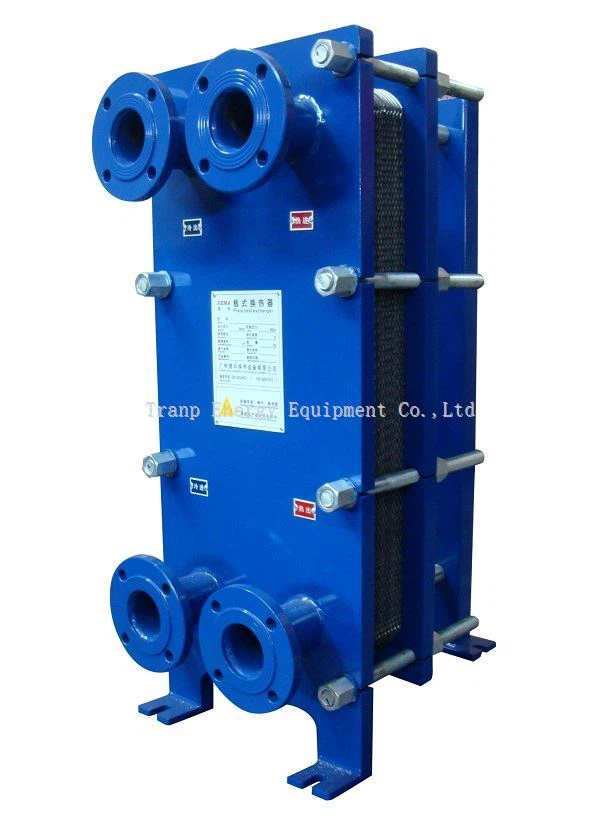
In HVAC systems, plate heat exchangers are used to maintain a comfortable temperature inside buildings. For example, in a typical air conditioning system, a plate heat exchanger is used to transfer heat between the chilled water and the air being circulated throughout the building. As warm air passes over the cold water, it is cooled and then returned to the building, while the water absorbs the heat and is then transported to the chiller for re-cooling. This cycle is repeated continually to maintain a consistent indoor temperature.

Material Design and Selections
For various applications and requirements, we provide many types of material.
Here is a simple common material sheet for reference.
Material Selection | ||
Plate Material | SUS304, SUS316L, SMO254, Ti, Ni, Hastelloy |  |
| Gasket Material | NBR, HNBR, EPDM,Viton/Flurorubber,Chloroprene, Silicone Rubber |  |
| Frame Material | Carbon Steel, Stainless Steel |  |
*For specific requirements, please contact us for confirmation | ||
Product Advantages
Safety
High heat transfer efficiency, thin plates
Small floor area
Cost-effective
Low fouling coefficient
Convenient cleaning, it is remvable
Application Example
Textile Industry
Dye production wastewater contains acids, alkalis, salts, halogens, hydrocarbons, amines, nitro compounds, dyes and their intermediates, and some also contain pyridine, cyanide, phenol, benzidine, and heavy metals such as mercury, cadmium, and chromium.
These wastewater components are complex and toxic, and difficult to treat.
Therefore, the treatment of dye production wastewater should select appropriate treatment methods according to the characteristics of the wastewater and its discharge requirements:
Coagulation and filtration: remove solid impurities and inorganic substances;
Chemical oxidation method, biological method and reverse osmosis method: removal of organic matter and toxic substances, etc.;
Ion exchange method:remove heavy metals.
Decolorization can generally adopt the process flow composed of coagulation and adsorption.

Contact Us
Contact person:Sylvie
 mail: sales02@tranp.cn
 whatsapp/tel: +86 18776369372
Hot Tags: phe in hvac, China phe in hvac manufacturers, suppliers, factory, lube oil cooler heat exchanger, plate frame heat exchanger, condenser heat exchanger, Air Compressor Heat Exchanger, double wall heat exchanger, heat condenser