

Evaporators for chiller
Chiller units are an essential component of most HVAC systems in commercial and industrial settings. They use a circulating refrigerant to remove heat from a building or process, and then transfer it outside. One of the most critical parts of a chiller unit is the evaporator, which absorbs the heat and cools the refrigerant. However, there are several types of evaporators that can be used in a chiller unit, each with its own advantages and disadvantages. In this blog, we'll take a closer look at some of the different types of evaporators used in chiller units and the benefits they offer.

Shell and Tube Evaporators
The shell and tube evaporator is one of the most common types of evaporators used in chiller units. As the name suggests, it consists of a series of tubes surrounded by a larger shell. The refrigerant flows through the tubes, while the chilled water flows through the shell. This design allows for efficient heat transfer and easy cleaning, as the tubes can be easily removed for maintenance. Shell and tube evaporators are often used in larger chiller units where high heat loads are required.

Plate and Frame Evaporators
The plate and frame evaporator is another popular type of evaporator. It consists of a series of thin metal plates that are stacked together and sealed around the edges. The refrigerant flows through one set of plates, while the chilled water flows through the other. This design provides excellent heat transfer efficiency, as the plates offer a large surface area for heat exchange. Additionally, plate and frame evaporators are relatively compact and lightweight, making them suitable for smaller chiller units.

Flooded Evaporators
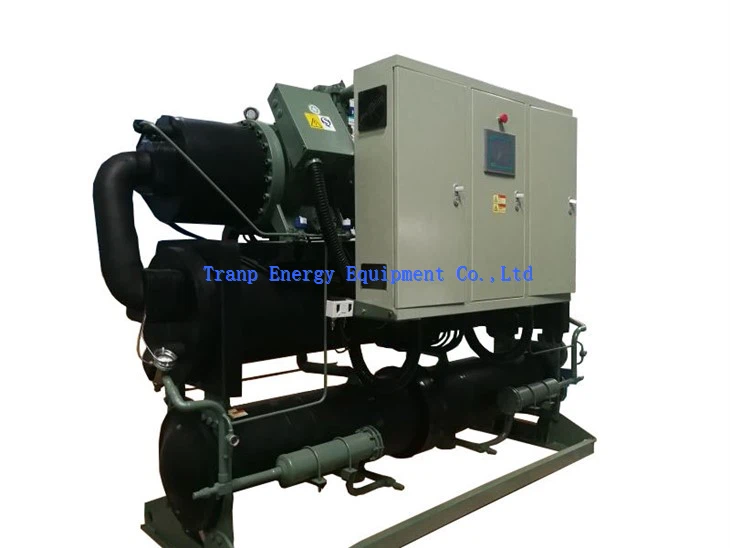
Flooded evaporators are used in larger chiller units where high efficiency is required. They consist of a large tank or vessel that is filled with refrigerant. The chilled water flows through a heat exchanger immersed in the refrigerant, and the heat is transferred from the water to the refrigerant. This type of evaporator offers excellent heat transfer efficiency, but can be difficult to maintain due to the need for regular refrigerant level control and monitoring.
Falling Film Evaporators
Falling film evaporators are similar in design to a flooded evaporator, but they use a thin film of refrigerant instead of a flooded tank. The refrigerant is sprayed onto a series of tubes, and the chilled water flows over the tubes. This design allows for excellent heat transfer efficiency and is often used in larger chiller units for process cooling applications.
In conclusion, there are different types of evaporators used in chiller units, and each one offers distinct advantages and disadvantages. By understanding the different options available, you can better choose the type of evaporator that will best meet the needs of your HVAC system or industrial process.